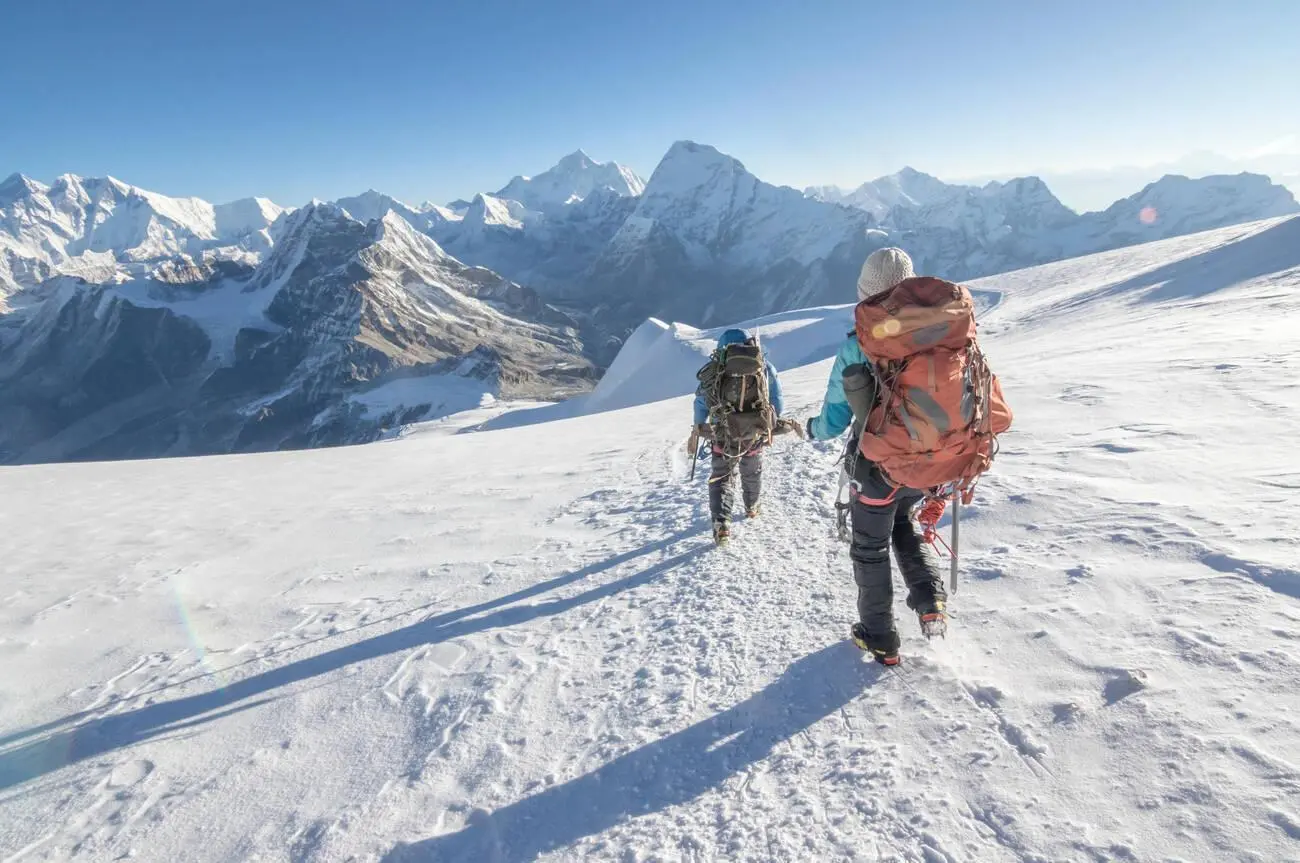
Mera Peak, standing at 6,461 meters (21,199 ft), is one of the highest trekking peaks in Nepal and offers climbers a unique combination of trekking and mountaineering adventure. Located in the Solukhumbu region, Mera Peak provides spectacular panoramic views of five of the world’s highest mountains: Everest, Lhotse, Makalu, Cho Oyu, and Kanchenjunga. This peak is an ideal choice for climbers who want a genuine Himalayan summit experience without requiring extensive technical mountaineering skills.
The expedition organized by Alpine Spirit Treks & Expedition begins with a scenic flight from Kathmandu to Lukla, followed by a gradual trek through picturesque villages such as Paiya, Panggom, and Khare. Along the way, climbers pass lush forests, terraced farmland, and traditional Sherpa villages, offering both natural beauty and cultural immersion. The ascent itself involves trekking to Mera High Camp at 5,780m and then summiting early in the morning to witness breathtaking sunrises over the Himalayan peaks.
The best seasons for climbing Mera Peak are pre-monsoon (spring: March to May) and post-monsoon (autumn: late September to November). During these periods, the weather is generally stable, offering clear skies, moderate temperatures, and excellent visibility of the surrounding Himalayan giants. Spring is particularly beautiful as the rhododendrons bloom, painting the hillsides with vibrant colors. Autumn, on the other hand, offers crisp air and spectacular sunsets, ideal for photography enthusiasts.
Winter climbs (December to February) are challenging due to extreme cold and heavy snow accumulation, while summer (June to August) is generally avoided because of the monsoon, which brings heavy rain, slippery trails, and frequent cloud cover that obstructs mountain views. Planning a climb in the ideal season not only enhances the summit experience but also minimizes risk related to weather and avalanches.
Key points about Mera Peak climbing seasons:
Mera Peak is categorized as a trekking peak, making it accessible to climbers with basic mountaineering skills. While technical expertise is limited to some glacier travel and basic ice axe use, the climb requires good physical fitness and stamina due to long trekking days, high altitude, and gradual elevation gain. Altitude acclimatization is crucial, and Alpine Spirit Treks & Expedition designs the itinerary to allow sufficient rest and acclimatization days to prevent altitude sickness.
Transportation involves an exciting domestic flight from Kathmandu to Lukla, which itself is a highlight due to the dramatic views of the Himalayas. The trek then follows a mix of well-established trails, river crossings, and mountain passes like Zatrwa La (4,600m). Returning from the summit, climbers retrace the trekking route to Lukla and fly back to Kathmandu, completing the adventure.
Highlights regarding difficulty and transportation:
During the Mera Peak expedition, climbers enjoy a combination of teahouse and camp accommodations. Lower elevation stops, such as Lukla, Paiya, and Kothe, offer comfortable teahouses with basic rooms, shared bathrooms, and local cuisine. As the altitude increases, especially at Khare and Mera High Camp, climbers stay in tents with heated dining areas provided by the expedition team. Alpine Spirit Treks & Expedition ensures that meals are nutritious and high-calorie, essential for energy and acclimatization at high altitudes.
Typical meals include a mix of Nepalese and Western dishes, such as rice, noodles, potatoes, soups, and pasta, with hot drinks like tea, coffee, and soup to combat the cold. Hydration is emphasized, and purified water is available along the route. Proper nutrition and rest are critical to the success of the summit attempt, and the expedition team pays close attention to climbers’ dietary needs and health.
Food and accommodation highlights:
Climbing Mera Peak requires several permits regulated by the Nepalese government. Alpine Spirit Treks & Expedition ensures all necessary documentation is arranged smoothly before the expedition begins. Key permits include the National Park Permit for Sagarmatha National Park, the Trekkers’ Information Management System (TIMS) Card, and the Peak Climbing Permit issued by the Nepal Mountaineering Association. These permits are mandatory for both trekking and climbing, helping preserve the natural environment and ensuring climbers’ safety.
Permit costs vary depending on the season and nationality, and they must be obtained in advance to avoid delays. The expedition team also assists with customs, documentation, and any required liaison with park authorities, ensuring a hassle-free experience for climbers.
Permit details:
Mera Peak offers an unparalleled Himalayan experience, combining adventure trekking, high-altitude climbing, and cultural immersion. It is ideal for climbers seeking a challenging yet achievable summit without the extreme technical demands of higher peaks. Climbing Mera Peak also provides a sense of accomplishment with breathtaking vistas of some of the tallest mountains in the world, all while trekking through authentic Sherpa villages and pristine landscapes.
Choosing Alpine Spirit Treks & Expedition for this adventure guarantees safety, professionalism, and personalized support. Their experienced guides, porters, and logistic teams ensure that climbers focus on the adventure while the company handles accommodations, meals, permits, and emergency preparedness. The company’s attention to detail and commitment to climber success makes the Mera Peak expedition both memorable and rewarding.
Reasons to climb with Alpine Spirit Treks & Expedition:
After breakfast, we will take a guided sightseeing tour of Kathmandu’s most iconic landmarks, including Swayambhunath Stupa (Monkey Temple), Pashupatinath Temple, and Boudhanath Stupa. This gives you a chance to immerse yourself in Nepal’s rich history, Buddhist and Hindu traditions, and local architecture. In the afternoon, our team will check your trekking gear and ensure all permits, including the National Park Entry and Peak Climbing Permit for Mera Peak, are ready. This day is perfect for last-minute shopping and acclimatizing to the altitude before the trek begins.
Today, we take an early morning scenic flight from Kathmandu to Lukla, which offers breathtaking views of the Himalayan range. Upon arrival in Lukla, we meet our trekking crew and begin the trek to Paiya. The trail follows the Dudh Koshi River and passes through charming Sherpa villages, suspension bridges, and lush forests. The trek is moderately challenging, allowing your body to start adjusting to higher altitudes. Overnight in Paiya provides a cozy teahouse stay with views of distant snow-capped peaks and a chance to enjoy traditional Sherpa hospitality.
The trek today leads us deeper into the Solukhumbu region, moving from Paiya to Panggom. The trail is a mix of forested paths and open clearings, offering spectacular views of Hinku and Mera peaks in the distance. Along the way, we pass small monasteries and local settlements where the Sherpa culture is evident. The trek is moderately paced to conserve energy while gently ascending. Panggom, a quaint village, provides a peaceful overnight stop in traditional teahouses, allowing trekkers to enjoy local cuisine and prepare for the more challenging sections ahead.
Today’s trek from Panggom to Ningsow is slightly shorter, giving you time to soak in the surrounding Himalayan scenery. The trail meanders through dense rhododendron forests, rugged cliffs, and along pristine rivers, gradually rising in altitude. Villages along the route reflect traditional Sherpa life, where prayer flags flutter and mani stones mark sacred paths. Ningsow is a charming village with friendly locals and simple teahouse accommodations. This stop allows trekkers to continue their acclimatization, ensuring they are physically ready for the increasing altitude of the coming days.
This is one of the longer trekking days, leading us from Ningsow to Chhatra Khola. The trail winds through dense forests, steep ridges, and picturesque valleys. Trekkers experience the raw beauty of the Himalayas with views of glaciers and snow-capped peaks emerging in the distance. The altitude remains manageable, allowing for a steady pace. Chhatra Khola is a small settlement, ideal for an overnight stop. Here, trekkers can relax, enjoy the local cuisine, and share stories with fellow trekkers while absorbing the tranquil Himalayan environment.
Today’s trek takes us to Kothe, a significant altitude gain as we climb into the high alpine zone. The path traverses beautiful forests, rocky terrains, and offers expansive views of the surrounding peaks. Trekkers start noticing the transition to a colder, more rugged environment with fewer trees and more snow patches at higher elevations. Kothe serves as an important acclimatization point before we move further into the higher Himalayas. The village offers warm teahouses, allowing trekkers to rest, hydrate, and prepare for the challenging trek ahead.
The trek from Kothe to Thaknak is shorter but involves a significant ascent, helping trekkers adjust to higher elevations. The trail passes through open alpine meadows, moraines, and glacial streams. The air feels thinner, and the landscape becomes more rugged and dramatic, with panoramic views of Mera Peak and surrounding summits. Thaknak is a high-altitude settlement offering basic accommodations, where trekkers can rest, hydrate, and acclimatize further. This is a key stage in preparing for the final approach to Khare and eventual summit attempts.
Today, we trek from Thaknak to Khare, entering the high-altitude zone critical for Mera Peak ascent. The path follows the glacier’s edge and passes dramatic mountain scenery, including views of Hinku, Mera, and Amphu peaks. Trekkers begin feeling the effects of altitude more acutely, so a slow and steady pace is essential. Khare serves as the main base camp for climbers, providing simple lodges and an excellent environment for pre-climb acclimatization. Here, climbers will also receive guidance and training on climbing techniques, ropes, and safety protocols for the summit push.
A full day at Khare is dedicated to acclimatization and climbing preparation. Trekkers may take short hikes to nearby ridges to adjust to altitude while practicing climbing techniques under the supervision of our expert guides. This includes training on crampons, ice axes, and rope usage. Proper hydration, rest, and nutrition are emphasized to prevent altitude sickness. The serene surroundings offer breathtaking views of Mera Peak and its glacier system, providing an inspiring backdrop as climbers prepare mentally and physically for the summit attempt planned for the following day.
Today, we ascend from Khare to Mera High Camp, a key staging area for the summit attempt. The trek involves navigating moraine trails, rocky slopes, and glacier patches. Trekkers gain more experience with high-altitude trekking and start to feel the real challenge of mountaineering. Mera High Camp provides a crucial resting point to prepare for the final push to the summit. The surrounding vistas of towering Himalayan peaks are awe-inspiring, offering a dramatic and motivating environment. Guides ensure climbers are equipped with all necessary gear and check weather conditions for the summit day.
This is the pinnacle of the expedition as climbers attempt the summit of Mera Peak. Starting before dawn, trekkers ascend steep snow slopes and rocky ridges under the careful guidance of our expert team. Reaching the summit provides a 360-degree panorama of Nepal’s highest mountains, including Everest, Lhotse, and Kanchenjunga. After celebrating and capturing unforgettable memories, climbers descend safely back to Khare. The day is physically demanding but immensely rewarding, marking the culmination of weeks of trekking, acclimatization, and preparation in one of the most beautiful Himalayan regions.
A reserve day is included to account for weather delays or unexpected circumstances during the summit attempt. Trekkers can use this day to rest, explore nearby areas, or make a secondary summit attempt if conditions were not favorable the previous day. Staying at Khare allows climbers to recover from exertion while still enjoying the high-altitude scenery. This contingency plan ensures flexibility in our schedule, prioritizing safety and success. Guides use this day to evaluate climbers’ health, check gear, and plan the descent back to lower altitudes.
The descent begins today as we trek back from Khare to Kothe. Descending allows the body to adjust more easily from high altitudes, and the scenery remains spectacular with glaciers, ridges, and open valleys. The trail offers glimpses of villages and alpine flora that were not visible on the ascent. Kothe provides a comfortable overnight stop, giving trekkers a chance to relax after the high-altitude adventure and reflect on the experiences of the past days. Hot meals and warm accommodations make for a well-deserved rest.
Continuing the trek down, today we make our way to Thuli Kharka. The trail passes through alpine meadows, glacial streams, and rugged terrains while gradually descending. Trekkers can enjoy beautiful views of surrounding peaks and valleys that were previously hidden in clouds or mist. Thuli Kharka is a quiet, high-altitude settlement with cozy teahouses, offering a peaceful overnight stop. The descent allows muscles and joints to recover while maintaining a steady pace. This stage serves as a final opportunity to enjoy the pristine Himalayan wilderness before returning to lower elevations.
Today’s trek is challenging yet rewarding as we traverse the Zatrwa La Pass, one of the highest points on the return route. The trail offers breathtaking panoramic views of surrounding peaks, glaciers, and deep valleys. Crossing the pass marks a symbolic farewell to the high Himalayas before descending into forested paths and villages. Trekkers eventually reach Lukla, where they are warmly welcomed back by the bustling airstrip town. The evening is spent celebrating the successful trek and climbing achievements, enjoying dinner, and resting before the flight back to Kathmandu.
After breakfast, we take a morning flight back from Lukla to Kathmandu. The flight offers stunning aerial views of the Himalayan range, including peaks like Everest, Lhotse, and Ama Dablam. Upon arrival, trekkers are transferred to their hotel in Kathmandu. The rest of the day is free to relax, shop for souvenirs, or explore the city at a leisurely pace. This is also an opportunity to reflect on the Mera Peak adventure, share memories with fellow trekkers, and enjoy the comforts of Kathmandu before the final departure.
On the final day, our representative will escort you to Tribhuvan International Airport for your onward journey. This marks the end of a memorable expedition with Alpine Spirit Treks & Expedition, leaving trekkers with unforgettable experiences of the Himalayas, cultural encounters, and the personal achievement of summiting Mera Peak. Depending on your flight schedule, you may have a few hours to enjoy Kathmandu one last time, capturing final photographs or picking up souvenirs. The memories of the trek and summit will remain with you forever, inspiring future adventures in Nepal.
Clothing
Handwear
Footwear
Gear
Miscellaneous
Mera Peak is best climbed during the pre-monsoon (March to May) and post-monsoon (September to November) seasons. During these periods, the weather is relatively stable, skies are clear, and temperatures are more manageable, which significantly improves both trekking and climbing conditions. Climbing in winter or monsoon is not recommended due to extreme cold, heavy snowfall, and increased risk of avalanches. Alpine Spirit Treks & Expedition always advises climbers to plan their expedition according to these optimal periods for safety and enjoyment.
Mera Peak is classified as a trekking peak by the Nepal Mountaineering Association, making it suitable for trekkers with moderate fitness and basic climbing experience. While technical climbing skills such as ice axe and crampon use are helpful, Alpine Spirit Treks & Expedition provides thorough pre-climb training at Khare to ensure all climbers are comfortable with these techniques. Prior high-altitude trekking experience is recommended, as proper acclimatization is crucial for a safe and successful summit attempt.
The Mera Peak expedition involves trekking and climbing at high altitudes, with long daily hikes ranging from 4 to 8 hours and steep ascents above 5,000 meters. Climbers should be in good physical condition, capable of walking several hours a day while carrying a moderate backpack. Alpine Spirit Treks & Expedition emphasizes a gradual acclimatization schedule with rest days to reduce the risk of altitude sickness. Overall, preparation with cardio, strength, and endurance exercises prior to departure will enhance your experience.
During the Mera Peak expedition, accommodation varies from standard teahouses in lower villages to tents or basic lodges at higher altitudes such as Khare and Mera High Camp. Facilities are simple, often with shared bathrooms, limited hot water, and basic meals. Alpine Spirit Treks & Expedition ensures comfortable and safe accommodations, prioritizing hygiene and warmth. While high-altitude accommodations are more rustic, the focus is on providing climbers with a secure base for rest and acclimatization before challenging summit days.
Meals during the trek are usually a mix of local Nepali cuisine and continental options. Breakfast often includes porridge, eggs, or toast, while lunch and dinner feature rice, noodles, lentils, soups, and vegetables. At higher camps, the menu may be more limited due to logistical constraints, but Alpine Spirit Treks & Expedition ensures climbers receive high-energy meals tailored to maintain stamina and energy for climbing. Special dietary needs can be accommodated with advance notice.
While technically possible to climb independently, it is strongly recommended to hire a licensed guide through Alpine Spirit Treks & Expedition. Guides are experienced in route navigation, high-altitude safety, and emergency response, which significantly reduces risk. They also provide essential pre-climb training and support during the summit push, including setting ropes and offering expert advice on altitude management. Independent climbs are not only riskier but also less rewarding in terms of safety and overall experience.
Climbers must obtain several permits before attempting Mera Peak, including the National Park Permit for Sagarmatha National Park, the Peak Climbing Permit issued by the Nepal Mountaineering Association, and TIMS (Trekkers’ Information Management System) cards. Alpine Spirit Treks & Expedition handles all permit arrangements in advance, ensuring a smooth and hassle-free process. These permits are mandatory and help protect the natural environment while allowing authorities to monitor climbers for safety purposes.
High-altitude sickness (AMS) can occur above 3,000 meters and becomes more likely above 5,000 meters. Preparation involves proper acclimatization, staying hydrated, eating balanced meals, and ascending gradually. Alpine Spirit Treks & Expedition incorporates acclimatization days, such as the rest day at Khare, to allow climbers’ bodies to adjust. Guides monitor for symptoms like headache, nausea, and fatigue, and carry emergency medications and oxygen if needed. Following these precautions greatly reduces the risk of serious altitude-related complications.
Climbers need a mix of trekking and climbing gear, including insulated jackets, thermal layers, waterproof clothing, trekking boots, crampons, ice axes, harnesses, helmets, and gloves. Alpine Spirit Treks & Expedition provides a detailed gear list and advice on equipment rental or purchase in Kathmandu. Proper gear is essential not only for comfort but also for safety during the summit climb. Lightweight, layered clothing allows flexibility in varying weather conditions encountered on the trek.
Weather at high altitudes can be unpredictable, and summit attempts may be delayed due to snowstorms, strong winds, or poor visibility. Alpine Spirit Treks & Expedition includes contingency days in the itinerary to accommodate weather-related delays. Flexibility is key, and climbers are encouraged to remain patient. The safety of the team takes priority over reaching the summit, and guides will make decisions based on current conditions, ensuring climbers have the best chance of a successful and safe ascent.