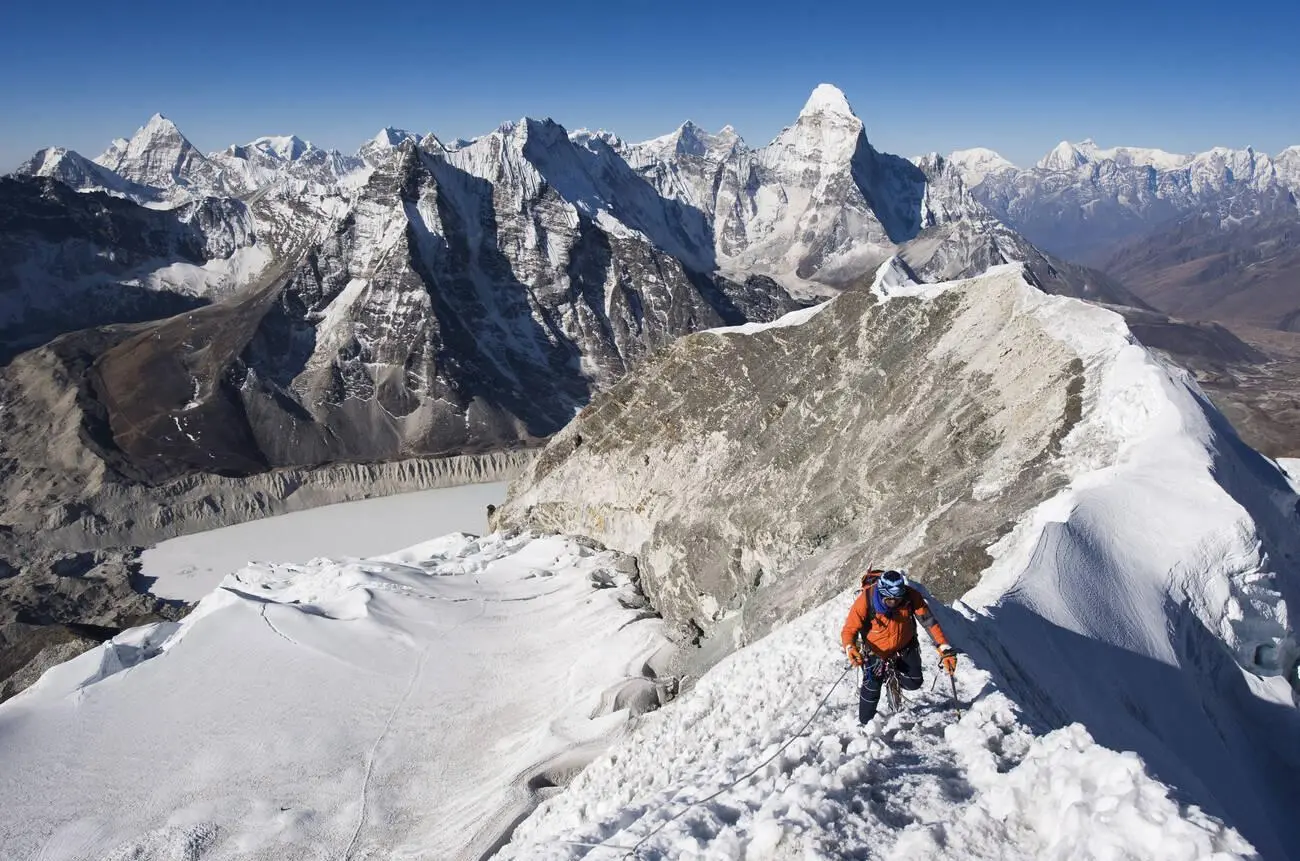
Island Peak, also known locally as Imja Tse, stands at 6,189 meters (20,305 ft) and is one of the most popular trekking peaks in Nepal. It offers a perfect blend of trekking and mountaineering, making it a prime choice for climbers who want to experience high-altitude mountaineering without tackling the extreme technical challenges of the Himalayas. The climb provides spectacular views of Everest, Lhotse, Nuptse, Ama Dablam, and other surrounding peaks, making it a photographer’s paradise.
This adventure begins with a scenic flight from Kathmandu to Lukla, followed by a trek through picturesque Sherpa villages and rhododendron forests. Trekkers pass through Namche Bazaar, Tengboche, Dingboche, and Lobuche before reaching the Island Peak Base Camp. The summit day involves glacier travel, basic ice climbing, and navigating a steep snow ridge, providing a thrilling yet achievable mountaineering experience for climbers with moderate experience.
The best seasons for climbing Island Peak are pre-monsoon (March to May) and post-monsoon (late September to November). During these periods, the weather is relatively stable, skies are clear, and snow conditions on the glacier and summit ridge are safer and more predictable. Spring offers blooming rhododendron forests and moderate temperatures, while autumn provides crisp skies and excellent mountain visibility, ideal for photography and acclimatization.
Climbing outside these windows, especially during the monsoon (June to August), can be challenging due to heavy rainfall, slippery trails, and increased risk of avalanches. Winter months (December to February) bring severe cold and strong winds, making climbing more dangerous and physically demanding. Therefore, timing your expedition with Alpine Spirit Treks & Expedition during these recommended windows ensures a safe and enjoyable experience.
Key Points:
Island Peak is categorized as a moderate trekking peak, suitable for individuals with prior trekking experience and basic fitness. The climb involves glacier travel, the use of crampons, ice axes, and fixed ropes on the final summit ridge. While technical skills are required, Alpine Spirit Treks & Expedition provides expert guides and a thorough pre-summit training session to ensure climbers are confident and safe.
Transportation begins with a scenic 35-minute flight from Kathmandu to Lukla, followed by trekking through Sherpa villages, suspension bridges, and alpine landscapes. The trek allows gradual acclimatization to high altitude, which is crucial for avoiding altitude sickness. Helicopter evacuation services are available in emergencies, and local porters carry most of the equipment, allowing climbers to focus on climbing and acclimatization.
Key Points:
Throughout the trek and climb, climbers will stay in a combination of tea houses and base camp tents. Tea houses in villages like Namche Bazaar, Tengboche, and Dingboche offer basic but warm accommodations with communal bathrooms and hot showers. Once you reach Island Peak Base Camp, camping becomes necessary, providing climbers with an immersive high-altitude experience under the guidance of Alpine Spirit Treks & Expedition staff.
Food during the trek includes traditional Nepali dishes like dal bhat (lentil soup with rice), noodles, and soups, along with western-style options. At high-altitude camps, meals are designed to be high-calorie and nutritious, supporting energy levels for climbing. Alpine Spirit Treks ensures proper hydration, healthy meals, and hot drinks, which are essential for acclimatization and peak performance.
Key Points:
Climbing Island Peak requires official permits, which Alpine Spirit Treks & Expedition handles efficiently. The two main permits are the Sagarmatha National Park Entry Permit and the Trekking Peak Permit issued by the Nepal Mountaineering Association (NMA). These permits ensure climbers’ safety, environmental responsibility, and legal compliance while trekking and climbing in the Everest region.
Permits vary in cost and documentation requirements, but the trekking company usually manages all logistics, including liaison with local authorities. Carrying permits is mandatory, and proper registration is required at check posts along the route. These regulations not only protect the environment but also contribute to local communities.
Key Points:
Island Peak is perfect for adventurers who want a taste of high-altitude mountaineering without the extreme technical demands of 7,000–8,000-meter peaks. It combines trekking through stunning landscapes with a summit push that rewards climbers with breathtaking views of Everest, Lhotse, Ama Dablam, and surrounding peaks. The gradual acclimatization schedule and optional training hikes ensure climbers are prepared and confident for the summit.
Choosing Alpine Spirit Treks & Expedition guarantees a safe, guided, and hassle-free experience. Their team of experienced mountaineering guides, high-altitude porters, and logistical support provides all necessary equipment, meals, and accommodation. They also focus on safety, health, and acclimatization, ensuring a rewarding and memorable expedition for climbers of varying skill levels.
Key Points:
Today begins with an early morning scenic flight to Lukla, a thrilling 35-minute journey over snow-capped peaks and deep valleys. On arrival, our expert guides will lead you on a three-hour trek to Phakding. The trail passes charming villages, monasteries, and suspension bridges over the Dudh Koshi River, offering your first taste of the Himalayan landscape. Along the way, you’ll meet local Sherpas and porters and enjoy the serene beauty of pine and rhododendron forests. Evening in Phakding provides time to rest, acclimatize slightly, and enjoy dinner with your team.
The trek to Namche Bazaar starts with a gradual ascent along the Dudh Koshi River. You’ll cross several suspension bridges and pass small villages that offer glimpses of Sherpa life. As the trail climbs steeply towards Namche, the scenery becomes more dramatic, with snow-dusted peaks like Thamserku and Kongde Ri dominating the skyline. After about five to six hours of trekking, you’ll arrive in Namche Bazaar, the bustling gateway to the high Himalayas. Here, you can explore local markets, enjoy tea in a traditional café, and take in the first panoramic views of Everest and surrounding peaks.
Today is dedicated to acclimatization, vital for a successful high-altitude expedition. After a relaxed breakfast, you can embark on an optional hike to the Everest View Hotel or the nearby hills, which provides stunning views of Everest, Lhotse, and Ama Dablam. Our guides will teach you essential acclimatization strategies and monitor your health. The afternoon can be spent exploring Namche Bazaar’s colorful markets, interacting with locals, or resting. Spending extra time at altitude today helps your body adjust, reducing the risk of altitude sickness as you ascend to higher elevations over the next several days.
Leaving Namche Bazaar behind, the trail ascends through beautiful pine and rhododendron forests toward Tengboche. Along the way, you will pass villages like Mongla and Phunki Tenga and enjoy panoramic views of Ama Dablam and Thamserku. Tengboche is renowned for its ancient monastery, perched dramatically against the backdrop of the Himalayan peaks. The serene atmosphere and spiritual energy of Tengboche provide a perfect opportunity to rest and meditate. This day’s trek takes approximately five to six hours, giving you ample time to soak in the scenery and take photographs of the magnificent surroundings.
The path today gradually climbs through the Imja Valley, offering spectacular views of Ama Dablam, Lhotse, and Island Peak. The village of Dingboche sits on a sunny terrace with a clear view of the surrounding peaks, making it ideal for acclimatization and photography. The trail passes through scattered settlements and fields, providing insight into the traditional Sherpa farming lifestyle. Upon arrival in Dingboche, you’ll feel the increasing effects of altitude, making rest and hydration crucial. Our guides will provide tips to help your body adjust as we prepare for higher elevations in the days ahead.
Today’s focus is on acclimatization, essential for safe high-altitude trekking. A short, optional hike to Nagarjun Hill or Chhukung Ri offers magnificent views of Makalu and Island Peak, helping your body adapt to higher elevations. The afternoon is free to rest, write in your travel journal, or explore the local village and interact with Sherpas. Drinking plenty of fluids, light meals, and gentle walks are encouraged. This day helps ensure your body is prepared for the more demanding sections ahead, including the ascent to Lobuche and eventually Island Peak Base Camp.
Departing Dingboche, the trail climbs gradually past the memorials of climbers who lost their lives in the Khumbu region. The trek is challenging but rewarding, with increasing views of the Khumbu Glacier and towering peaks. You’ll pass through Dugla before reaching the settlement of Lobuche, where prayer flags flutter in the high mountain breeze. Arriving in Lobuche, you will feel the high-altitude environment more intensely, making rest, hydration, and proper nutrition essential. Evening provides time to prepare for the next day’s hike to Gorakshep and Kala Patthar, iconic spots for Everest views.
From Lobuche, the trek to Gorakshep is relatively short but involves climbing to a higher altitude, so pacing is crucial. Gorakshep serves as the base for Everest Base Camp, offering spectacular glacier views. After settling in, a four-hour trek to Kala Patthar gives arguably the best panoramic view of Mount Everest, Lhotse, Nuptse, and Pumori. The sunset from Kala Patthar is breathtaking, making it a highlight of your journey. Descending back to Gorakshep, you will rest and prepare for the challenging route ahead toward Chhukung and Island Peak Base Camp.
Today involves a descent from Gorakshep back to Lobuche, providing a chance to observe the Khumbu Glacier and surrounding peaks from a different perspective. The trek is moderately strenuous due to the altitude, so maintaining a steady pace is important. Along the way, you’ll pass memorials, small settlements, and open valleys. After arriving in Lobuche, there’s time to rest, reflect on your journey so far, and prepare for the challenging trek over Khongma La Pass en route to Chhukung. The day also offers opportunities for photography and interaction with fellow trekkers.
This is one of the most adventurous days of the trek. You will cross the Khongma La Pass, a high mountain pass offering panoramic views of Island Peak, Baruntse, and Ama Dablam. The trek involves rocky terrain, moraines, and occasional snow patches, requiring careful navigation and focus. After six to seven hours, you will descend to Chhukung, a quaint village nestled beneath towering peaks. Here, you’ll rest at a teahouse, enjoy local cuisine, and finalize preparations for the Island Peak Base Camp climb the following day.
The trek today leads to the foot of Island Peak, passing rocky terrain, glaciers, and high-altitude landscapes. The trail is demanding and requires concentration and stamina. Upon reaching Island Peak Base Camp, you’ll find a camp with breathtaking views of the surrounding mountains. Our guides will help set up your gear, review climbing techniques, and prepare ropes, crampons, and ice axes for tomorrow’s summit attempt. This day is physically and mentally significant, as you reach the starting point for one of the most exhilarating high-altitude climbs of your life.
Today is the pinnacle of the expedition. After a pre-dawn start, you will ascend the snow and ice slopes of Island Peak, following fixed ropes under the guidance of experienced Sherpas. The climb requires careful use of crampons and ice axes, along with teamwork and focus. Reaching the summit is an unforgettable moment, offering 360-degree views of the Himalayas including Makalu, Lhotse, and Ama Dablam. After celebrating and capturing photos, you will descend safely back to Chhukung, where a warm meal and rest await, marking the successful completion of the climb.
Descending from Island Peak Base Camp, the trail leads through Chhukung and past Imja Valley, gradually dropping in altitude. The landscape transitions from glacial moraines to terraced fields and villages. Pangboche, home to one of the oldest monasteries in the Khumbu region, offers spiritual solace and cultural insight. The evening can be spent exploring the village, visiting the monastery, and enjoying the spectacular backdrop of Ama Dablam. This descent provides both physical relief and mental reflection on the achievement of summiting Island Peak.
The trek continues through rhododendron forests, villages, and terraced fields, gradually descending to Namche Bazaar. This day allows you to retrace steps while enjoying the mountain scenery at a more relaxed pace. Namche Bazaar’s bustling markets, cafes, and shops provide a perfect setting for celebration, shopping, and reconnecting with the local culture. Our team may host a small gathering to commemorate the summit of Island Peak and share stories from the trek, fostering camaraderie among climbers before the final stages of the journey.
The trek back to Lukla is scenic and less strenuous, descending through pine forests, villages, and suspension bridges along the Dudh Koshi River. After several hours, you will reach Lukla, where trekkers typically celebrate the completion of the challenging high-altitude portion of the expedition. The town offers a variety of lodges, cafes, and shops for last-minute souvenirs. This day provides a satisfying sense of closure as you reflect on the memories, friendships, and incredible landscapes experienced over the past two weeks.
An early morning flight from Lukla to Kathmandu marks the return to civilization. The scenic flight offers final views of the Himalayas from above. Upon arrival, you will be transferred to your hotel in Kathmandu for relaxation, souvenir shopping, or sightseeing in the city. In the evening, Alpine Spirit Treks & Expedition may host a farewell dinner, celebrating your accomplishment with the team, sharing photos, and recounting unforgettable moments from the trek and Island Peak summit.
After breakfast, you will be transferred to Tribhuvan International Airport for your onward flight. Memories of soaring peaks, remote valleys, and the camaraderie of fellow climbers will remain with you forever. Our team ensures a smooth departure, assisting with any final arrangements. This marks the conclusion of your Island Peak adventure with Alpine Spirit Treks & Expedition, leaving you with a profound sense of achievement and experiences that will last a lifetime.
Clothing
Handwear
Footwear
Gear
Miscellaneous
The ideal time to climb Island Peak is during the pre-monsoon season (March to May) and post-monsoon season (late September to November). These months offer stable weather, clear skies, and minimal snowfall, which are essential for both trekking and climbing safety. During these periods, the temperatures are moderate, making the ascent more manageable, and the stunning views of Everest, Lhotse, and Ama Dablam are at their best. Monsoon season should be avoided due to heavy rains and increased avalanche risk.
While prior high-altitude trekking experience is highly recommended, Island Peak is considered a “trekking peak,” meaning it is accessible to climbers with basic mountaineering skills. Alpine Spirit Treks & Expedition provides comprehensive guidance, training in the use of crampons, ice axes, and ropes, as well as acclimatization schedules. A strong fitness level, endurance, and mental preparedness are essential, but you do not need prior technical climbing experience to attempt Island Peak successfully.
A typical Island Peak expedition with Alpine Spirit Treks & Expedition lasts around 18 days. The journey begins with arrival in Kathmandu, followed by a scenic flight to Lukla and trekking through Namche Bazaar, Tengboche, Dingboche, and Lobuche. Acclimatization days are incorporated at Namche and Dingboche. The climb itself involves reaching Island Peak Base Camp, summiting the peak, and descending via Chhukung and Pangboche, before returning to Lukla and Kathmandu. This itinerary balances trekking, acclimatization, and climbing to minimize altitude-related risks.
Island Peak is classified as a moderate trekking peak, but it still poses challenges due to high altitude, icy slopes, and crevasse navigation. The summit involves steep sections with fixed ropes and requires use of crampons and ice axes. Physical fitness, stamina, and mental resilience are critical. Alpine Spirit Treks & Expedition ensures climbers are well-prepared with training, safety briefings, and experienced guides to help manage these difficulties while maximizing safety and enjoyment.
During the trek to Island Peak, accommodation is typically in teahouses, lodges, or Base Camp tents depending on location. Teahouses provide basic rooms with beds, blankets, and shared bathrooms, while at higher elevations like Island Peak Base Camp, camping with tents is necessary. Meals are nutritious, consisting of local Nepali cuisine such as dal bhat, noodles, soups, and seasonal vegetables. Alpine Spirit Treks & Expedition ensures balanced meals and proper hydration to support climbers’ energy levels at high altitudes.
Physical preparation is key for a successful Island Peak climb. Aerobic exercises like running, hiking with a weighted backpack, cycling, and stair climbing are recommended to build endurance and leg strength. Core exercises improve balance and stability, while strength training helps with carrying gear and managing steep ascents. Altitude training, if possible, and acclimatization treks can reduce the risk of altitude sickness. Alpine Spirit Treks & Expedition provides guidance on training and ensures gradual acclimatization throughout the expedition.
Climbers need high-altitude trekking and climbing gear, including insulated jackets, down layers, trekking boots, crampons, ice axe, harness, helmet, gloves, and sleeping bags rated for sub-zero temperatures. Sunglasses, sunscreen, and trekking poles are essential for sun protection and support on rugged terrain. Alpine Spirit Treks & Expedition provides a detailed gear checklist and offers equipment rental options for specialized climbing gear to reduce the burden on climbers while ensuring safety and comfort.
Yes, high-altitude sickness is a significant risk on Island Peak due to elevations exceeding 5,000 meters. Symptoms include headaches, nausea, dizziness, and fatigue. Alpine Spirit Treks & Expedition emphasizes proper acclimatization, slow ascent, and regular hydration to minimize risks. Guides are trained to recognize symptoms and can administer medication or adjust itineraries if necessary. Rest days in Namche and Dingboche, along with optional acclimatization hikes, are incorporated to allow climbers to adapt safely to higher altitudes.
Safety is a top priority for Alpine Spirit Treks & Expedition. The team includes experienced guides, Sherpa support, and trained staff for mountaineering emergencies. Climbers are provided with safety briefings, technical training, and equipment instruction. Routes are carefully chosen, and weather conditions are constantly monitored. Emergency evacuation plans and high-altitude medical kits are always available, ensuring that climbers have immediate support in case of health or technical issues during the ascent.
Yes, climbing Island Peak requires official permits from the Nepal Mountaineering Association (NMA) and a Sagarmatha National Park entry permit. Alpine Spirit Treks & Expedition arranges all necessary paperwork on behalf of climbers, including trekking permits, climbing permits, and liaison officer fees if required. These permits are essential for legal and safe access to the route, and having them in place ensures a smooth expedition without administrative issues, allowing climbers to focus fully on their trekking and mountaineering experience.
Climbers should have excellent cardiovascular endurance and muscular strength. Trekking days vary from 2–7 hours on steep and uneven trails, and the summit push involves climbing at high altitude in demanding conditions. Alpine Spirit Treks & Expedition recommends prior multi-day trekking experience, consistent fitness training, and acclimatization strategies. While guided support and porters reduce load, personal fitness remains crucial for safety, stamina, and enjoyment throughout the expedition.